
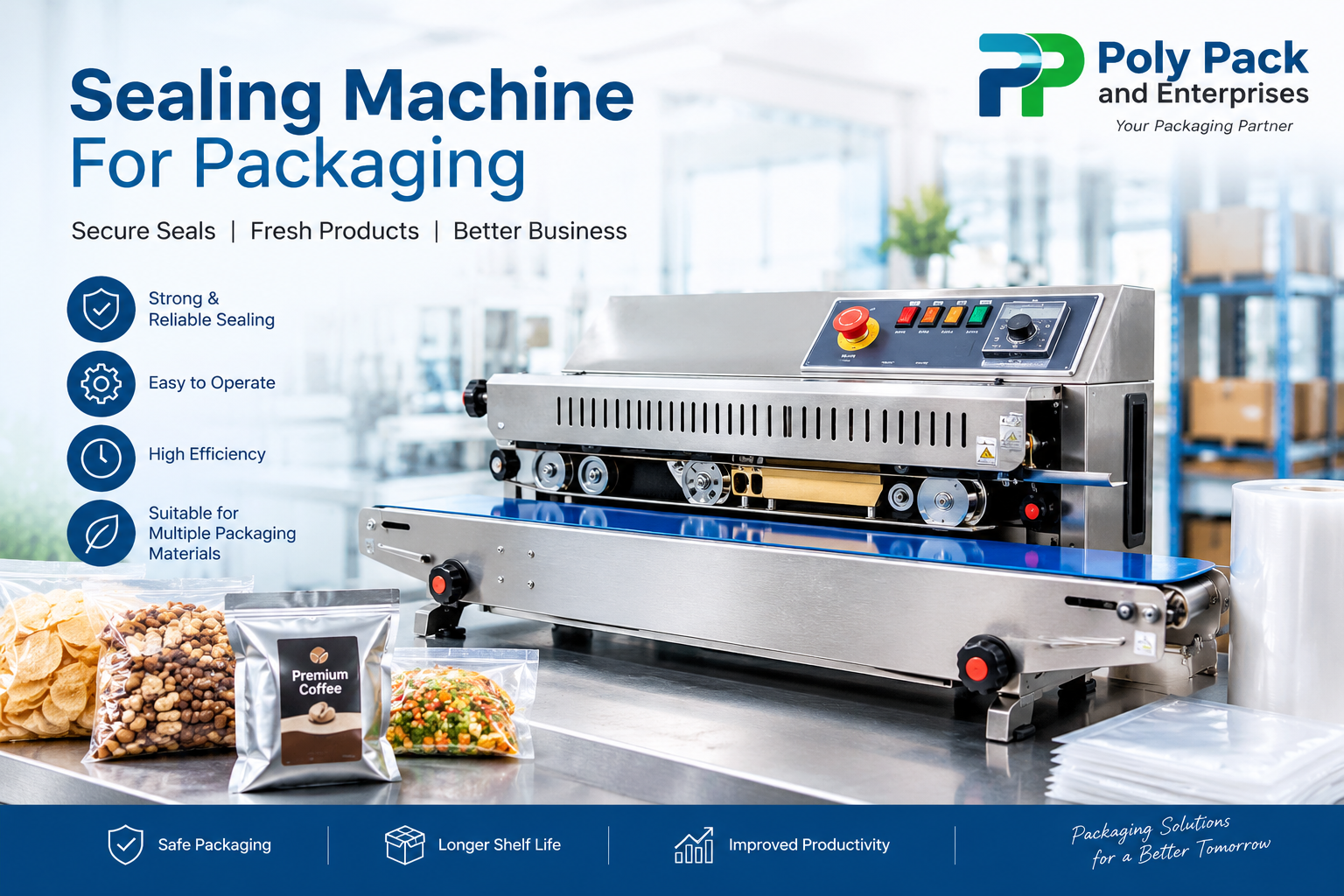
Sealing Machine For Packaging ensures products are handled, stored and transported effectively. Businesses look for packaging to be able to contain products, to be fully protected, to be conformable to a company's process and to be professional-looking. No matter what type of food and packaged goods a business handles or produces, a standardised sealing process will improve productivity and reduce mis-packed products.
When sealing bags, pouches and other sealing materials that you can seal, Sealing Machine For Packaging is the optimal solution for sealing. In this case, Sealer is the best helper to open packbags and package seals to save your handling time. It can also accommodate growing order quantities while delivering a consistent result.Poly Pack is an established business that is packaging solutions companies to businesses like yours who may need packaging equipment and other necessities. You need to be aware of the kind of packing machine that is available and the requirements, the compatible materials, and the production capacity.
Types of Sealing Machines for Different Requirements
Different businesses need different sealing methods. The correct equipment depends on package size, material, output volume, and the type of seal required.
1. Impulse Sealing Machines
The impulse sealer seals compatible thermoplastic materials with a brief application of electrical heat. They are sometimes used for smaller Sealing Machine For Packaging operations and businesses that seal bags or pouches by the batch.The packaging equipment might be right for stores, small manufacturing firms and packaging departments requiring a simple sealing. The operator simply inserts the item into the sealing area and operates the equipment as instructed.
2. Continuous Band Sealing Machines
The impulse sealer seals compatible thermoplastic materials with a brief application of electrical heat. They are sometimes used for smaller Sealing Machine For Packaging operations and businesses that seal bags or pouches by the batch.The packaging equipment might be right for stores, small manufacturing firms and packaging departments requiring a simple sealing. The operator simply inserts the item into the sealing area and operates the equipment as instructed.
3. Vacuum Sealing Machines
Continuous band sealers involve moving the packaging through a Sealing Machine For Packaging assembly so you can make repeated sealings without having to stop for every single package. This type of device can be handy if you need to do several bags or pouches during your shift.Some models also operate at varying package orientations and production rates. Customers should verify the maximum packaging capacity, maximum supported bag size and weight, and the range of supported package thicknesses before purchasing.
4. Automatic Sealing Machines
Automatic Sealing Machine For Packaging equipment eliminates manual handling of the products to be packaged. It can be integrated with filling, conveying or other packaging equipment, depending on the system.These types of systems may be suitable for companies that have high production volumes and standardised package dimensions. The installation area, maintenance, training of operators and the interface with other equipment should be considered prior to purchase.
Key Features to Consider Before Buying
Selecting a Sealing Machine for Packaging requires careful attention to technical specifications and everyday operating needs.
Sealing Temperature and Time
Sealing Machine For Packaging conditions vary according to what type of material is used for packaging. If your packaging equipment is fitted with appropriate time and temperature controls, this will enable the operator to develop a standard seal without excess damage to the material.
Material Compatibility
The amount of output required is based on the number of packages a business can handle in an hour or shift. A small business might require a single Sealing Machine For Packaging while large production plants might require continuous or automatic machines.
Production Capacity
The maximum output depends on the number of packages that a business produces in an hour or a shift. Sealing Machine For Packaging The operation may be simple for small firms or, for large production units, continuous or automated.
Ease of Operation
Easy operating procedures and simple controls can shorten training time. Readily available safety features and controls and an intuitive design will help operators get the most from the machine.
Maintenance Requirements
Routine cleaning, testing and servicing maintain equipment in working order. Sealing Machine For Packaging Once purchased, the maintenance schedule, availability of parts and who will undertake servicing should be clear before the item is purchased.
Comparison of Common Sealing Machine Types
The most appropriate option depends on the product, packaging material, desired output, available space, and budget. Buyers should compare actual machine specifications rather than selecting equipment based on its name alone.
Benefits of Using Suitable Sealing Equipment
Improved Operational Efficiency
A machine can take the hassle out of repetitive Sealing Machine For Packaging tasks and enable staff to get through packs more uniformly. This comes in handy during hectic times or if the business receives regular bulk deliveries.
Consistent Package Closure
A controlled Sealing Machine For Packaging process can mean less variation between packages. If you are operating an open heat sealer you can directly control the consistency. This includes a clean environment, correct machine settings and good operator technique.
Better Product Handling
Packages that are kept securely sealed are less trouble to move, store and ship. A suitable Sealing Machine For Packaging can also prevent accidental opening during normal movement and shipment.
Support for Business Growth
As demand grows, this process may need to become more organized and the right-sized equipment will be able to help absorb a higher workload without being entirely dependent on manual sealing.
Reduced Repetitive Work
By Sealing Machine For Packaging the worker can avoid much of the physical strain of repetitive manual sealing. It is even possible that they could direct their attention to other elements of the packaging process, such as inspection, labelling and order fulfilment.
Industries That Use Packaging Sealing Machines
Sealing Machine For Packaging are prevalent in many sectors, but machines and sealing methods should be appropriate for the product and package.
Food packaging: Can close suitable packaging such as bags and pouches with dry foodstuffs, ingredients, snacks or other items. Check in regard to food contact suitability and hygiene requirements.Retail and consumer goods:Sealing Machine For Packaging can be used for accessories, household goods and small items packaged in appropriate bags.
Manufacturing: Equipment to seal bags of components, packs of materials or another sort of industrial packaging in the factories or workshops.Some drugs and even equipment may require validation. Compliance controls and material compatibility is what you need to look out for when packaging your products.Distribution and packaging:Sealing Machine For Packaging to assemble related products for distribution, sorting, and packaging teams.Equipment should always be chosen based upon the environment and the product.
How Fits into Your Packaging Requirements
Those looking to buySealing Machine For Packaging need to identify the packaging material, package sizes, output requirement, and the means of operation.This information will give buyers an idea of what kind of equipment they might use in their day-to-day work. It's helpful to ask what models and technical specifications are available, along with installation, operator information and after sales support.
Things to remember when choosing a Sealing Machine For Packaging Businesses considering the should double check the options and machine functions with. Confirm the product is available, the manufacturers specifications and the service options all before ordering.A good buying decision will help minimize the risk of acquiring equipment that isn't suitable for your daily packaging requirements.
Common Mistakes to Avoid When Choosing a Machine
Here are some purchasing mistakes that businesses should try to avoid in order to make better purchasing decisions:
Disregarding compatibility of materials:
Always test out the packaging material you want to use prior to selecting machinery.
Picking the wrong capacity
take into account the normal as well as the maximum quantities produced.
When talking about the total cost, add maintenance, power usage, consumables, and even possibly some deactivations.
Overlooking safety features:
Check operating instructions, protective features and health and safety requirements at work.
Repeat sample runs:
Validate seal performance by simulating real-world conditions.
You will learn what cleaning, inspection, and servicing is necessary before you install.
Conclusion
For companies where packages need to stay sealed tight from when they are handled throughout storage and distribution, a reliable Sealing Machine For Packaging process is essential. A piece of equipment can help to deliver accuracy, increase efficiency, reduce repetitive manual labour and maintain a quality finish to packaging.When choosing the right machine think about Sealing Machine For Packaging technology, material compatibility, throughput, and operation, safety and maintenance.
Companies should compare specifications and try out target packaging materials prior to investing in a machine.Poly Pack and Enterprises can be looked at for use in the supplier assessment process, products and technical information is available and can be verified directly. By aligning equipment capabilities with real business needs, businesses can create a more streamlined and reliable packing operation.
Frequently Asked Questions
1. What is a Sealing Machine for Packaging?
It is a machine that seals the appropriate packaging material (bags, bags) for compatible packaging to seal with appropriate sealing. The type of equipment is determined by the type of material and the packaging process.
2. Which sealing machine is suitable for a small business?
Impulse sealers are most appropriate if you package in a series and seal only suitable types of bags. Which one you will need for sealing in your business will depend on your size, quantity of bags, and sealer specifications.
3. Can one machine seal every packaging material?
A: No. The scopes are different for different materials. Buyers can check the manufacturer's instructions and then test the material they want to use.
4. What should I check before purchasing sealing equipment?
Review sealing capacity, compatibility of materials, operation of controls and safety features, service and maintenance needs, space available and support from the supplier. Conduct sample testing to validate.
5. Are automatic sealing machines suitable for high-volume operations?
They may be appropriate for high volume work when they have enough capacity and are laid out to flow work. Consider integration, maintenance and operator training.